
Raccoons are very adaptable and found in many places in North America. There are over 20 million of them. They are known for their interesting masked faces and tricks, and so they are called nature’s bandit.
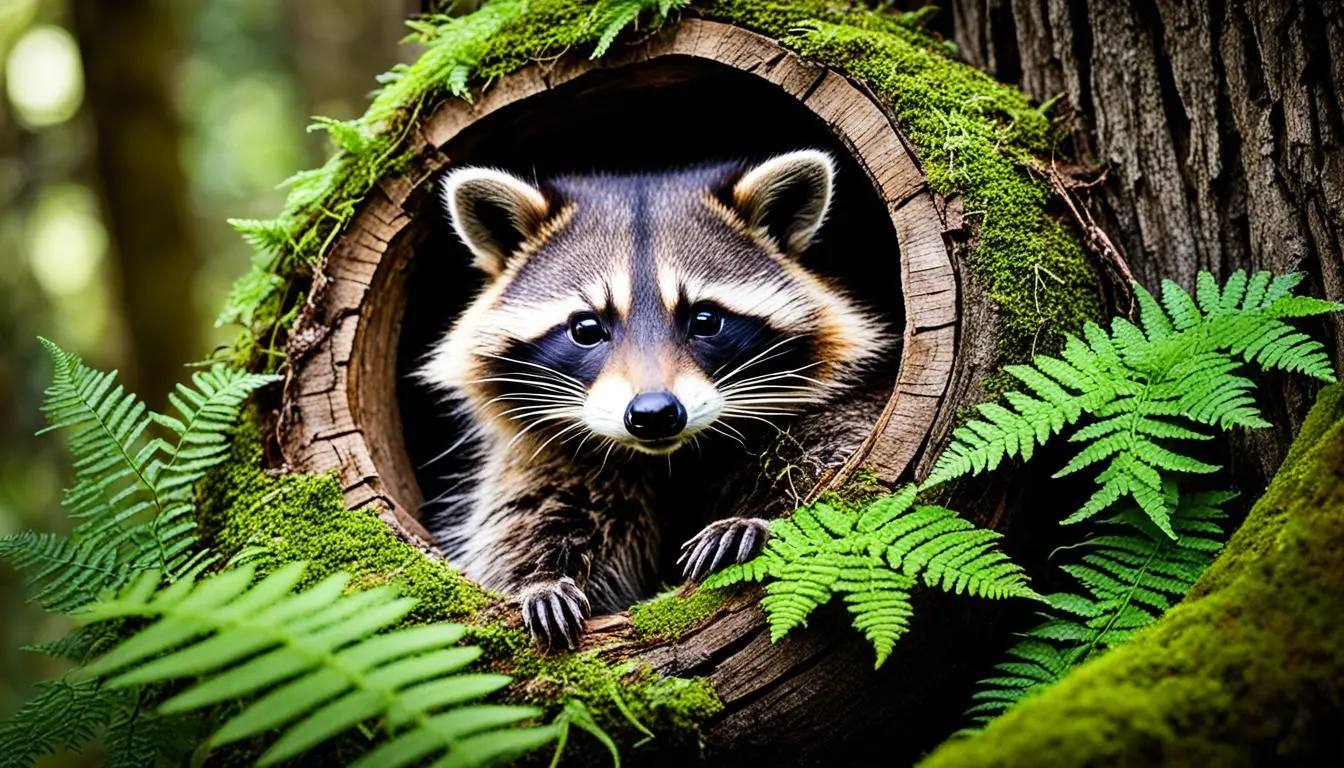
Table of Contents
Show a cozy raccoon den nestled in the hollow of a tree trunk, with moss and ferns growing around it. The den should have a narrow entrance, and inside, you can see fluffy raccoon kits cuddled up together in a soft nest made of leaves and twigs. The tree should be situated in a lush forest, with beams of sunlight filtering through the leaves, casting dappled shadows on the forest floor. A nearby stream can be seen meandering through the underbrush, with small fish swimming in its clear waters. In the background, you can depict a misty mountain range, shrouded in clouds and mist.
This article will show you how raccoons live, their quirks, and cool features. You’ll learn about their smart ways and how they solve problems. Get ready to be impressed by how they survive.
Key Takeaways:
- Raccoons are one of the most adaptable and widespread mammals in North America.
- Raccoons have a population of over 20 million in North America alone.
- Their masked faces and mischievous behavior have earned raccoons the nickname “nature’s bandit.”
Understanding the Raccoon: Procyon Lotor Exposed
In my quest to learn more about raccoons, I found out some key things. It’s important to know what makes them stand out, where they live, and what they eat. This helps us understand Procyon lotor, the bandit of the animal world.
Defining Characteristics of Raccoons
Raccoons have unique looks that make them easy to spot. They have a black mask around their eyes that looks cool and helps them see at night. Their front paws are very handy, almost like extra hands. Raccoons use them to grab things with great skill. And, their tail isn’t just for looks. It helps them balance and talk to each other, too.
The Habitat and Range of the Common Raccoon
Raccoons can live in many places, from forests to cities. They are very good at finding homes and food wherever they go. This makes them quite common across North America. You can see them from the woods to busy cities like New York.
Dietary Habits: What Raccoons Really Eat
Raccoons are not just trash eaters. They eat a lot of things because they can. This includes fruits, nuts, and small animals. They are also known to steal bird eggs and eat what’s already dead. Their ability to eat a wide variety of foods helps them survive and do well in different places.

Create an image depicting a raccoon’s natural habitat, featuring a lush forest setting with tall trees and branches for climbing. Include a small stream or pond where the raccoons can wash their food and paws, and incorporate some natural elements like rocks, berries, and fallen logs. Show the raccoons in different positions, such as climbing trees, scurrying along the forest floor, or snacking on berries. Use warm, earthy tones to capture the natural beauty of the woodland environment.
To truly know raccoons, we must understand their special looks, where they live, and what they eat. These details show us how amazing Procyon lotor is. They are a popular topic for nature lovers all over the world.
The Secret Life of Raccoons
Have you ever wondered what raccoons do at night? This part will uncover the amazing secrets of raccoon life and what they do under the moon.
Raccoons love the night life, being most active when we’re asleep. They rely on their sense of smell and touch to move around. These little guys are much more than just scavengers. They have lots of cool habits and behaviors that help them live wild lives.
They’re very curious, always checking out their surroundings. With their nimble paws, they can open things and find food to eat. Not picky eaters, they enjoy a menu of fruits, nuts, bugs, and even eggs. This diet diversity helps them live in many places, from forests to cities.
Raccoons are smart, too. When faced with a challenge, they get all curious and never give up. They use smart thinking to get to food, even if it’s hidden away.
They have their own raccoon community, packed with interesting social ways. This includes families where moms and kids live together. They talk with different sounds, like chitters and growls. Watching how they move and hold their tails is also their way of chatting.
To see a picture of what raccoons do when we’re not watching, look below:
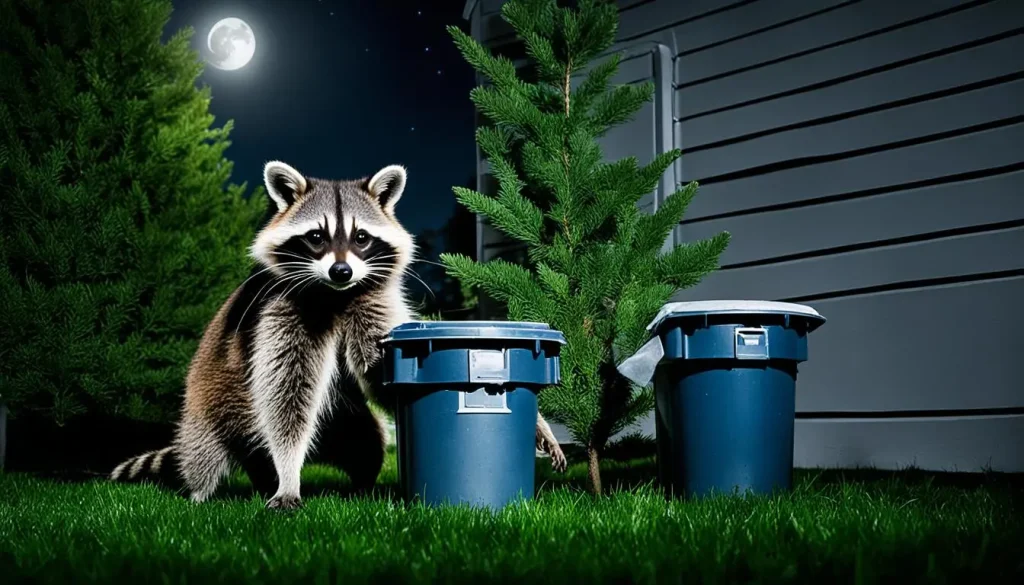
Create an image of a raccoon sneaking around a backyard at night, with the moon casting shadows on the grass. The raccoon is standing on its hind legs, digging through a trash can with its front paws, while another raccoon peeks out from behind a nearby tree. The scene should feel mischievous and playful, with the raccoons looking like they’re up to no good.
| Raccoon Behavior | Raccoon Habits | Raccoon Secrets | Raccoon Nocturnal Activities |
|---|---|---|---|
| Curious nature | Resourceful foragers | Impressive problem-solving abilities | Nocturnal habits |
| Agile paws and dexterous fingers | Variety in diet | Skilled scavengers | Active during the night |
| Exploration of environment | Adaptability to different habitats | Unique social behavior | Communication through vocalizations and body language |
Raccoons really are fascinating. Their ability to adapt, their curiosity, clever thinking, and the way they interact with each other show just how amazing they are. They’re truly nature’s little wonders.
Raccoon Social Behavior
Raccoons interact a lot, giving us a peek into their lively world. They usually team up in small bunches, called nursery groups. In these teams, some are more powerful than others. This power is shown by being loud, showy, and at times aggressive.
Raccoons talk to each other in many ways. They make sounds like hisses, growls, and screeches. But they also signal with their tails, eyes, and how they stand, making certain points clear. These clues help them be friends or end disagreements.

Create an image depicting the playful and curious nature of raccoons as they interact with each other in a group. Show them using objects like branches and rocks to play, with one raccoon leading the group while others follow closely behind. Incorporate natural elements like trees and bushes to convey their wild habitat, along with subtle hints of their mischievous reputation, such as overturned trash cans in the background.
Raccoon Intelligence and Problem Solving
Raccoons are actually quite smart and great at figuring things out. They love poking their noses into new places because they’re just so curious. And when it comes to finding food, they’re quite the little acrobats, reaching foods most creatures can’t.
With their clever minds, raccoons find ways around any tricky spot. They remember what works and what doesn’t, using this to fix problems. Sometimes, they even use tools to make life a bit easier, like sticks or stones to grab a snack or get into locked spaces.
Human and Raccoon Interactions: Coexistence or Conflict?
Humans and raccoons can either get along or mix it up. Raccoons are good at living near people, often making themselves at home in cities and suburbs. But this skill can sometimes stir up trouble when they mess with pets or homes.
Though they can be pests, it’s key to treat raccoons with a mix of care and caution. Securing our waste, keeping the food they love away, and closing any ‘guest entrance’ can keep things calm. It also helps if we all learn a bit about raccoons and how to live together without fuss.
Conclusion
In this article, I shared cool facts about raccoons and how they act. Raccoons, or Procyon lotor, can live in many places. They have a special look, with a mask on their face and a ring on their tail.
Raccoons are known to be smart and like to play tricks. They learn quickly and can solve problems. When looking for food, they use their hands well to grab and twist things.
It’s important to get along with raccoons by knowing more about them. This means learning about how they act and where they live. By understanding them, we can help keep their homes safe for them and us.
FAQ
What are some interesting facts about raccoons?
Raccoons are known for being curious and mischievous. They look unique with special face markings and a ringed tail. Raccoons can live in many different places.
What do raccoons eat?
Raccoons eat a mix of plants and animals. They love fruits, nuts, insects, and small creatures. Raccoons are not picky and will even eat garbage.
Where do raccoons live?
Raccoons live all over North America. They can be in the city, forests, and other places. These animals are good at living in many kinds of homes, like swamps and neighborhoods.
Are raccoons intelligent?
Yes, raccoons are very smart. They can solve problems and learn quickly. Raccoons are great at finding food and remembering how to do things.
How do raccoons communicate?
Raccoons talk with sounds, looks, and smells. They use different noises like growls and purrs. This helps them tell others how they feel.
Can raccoons be dangerous?
Usually, raccoons don’t hurt people. But, they might if they are scared. It’s best to stay away from them and not give them food.
Source:
https://kids.nationalgeographic.com/animals/mammals/facts/raccoon
https://en.wikipedia.org/wiki/Raccoon
You may also like:
- “Hours of Fun and Learning”: Why the Book The Fascinating Animal Book for Kids: 500 Wild Facts! is a Hit
- Raccoon Facts: Nature’s Mischievous Bandit
- Discover Fascinating Penguin Facts & Behavior
- “They’re Disappearing!” The Animals We May Lose Before Your Pet Gets Old [animals going extinct]
- 7 Reasons Your Saint Bernard is Drooling Excessively (and What to Do)